Swimming Pool Ozone vs Chlorine Guide
Swimming Pool Ozone vs Chlorine Guide
Maintaining safe, clean swimming pool water is vital for swimmers’ health. Ozone and chlorine are the most common disinfection methods, each with unique strengths and limitations. This condensed guide compares their core features, performance, costs, and practical uses to help you make informed decisions.
Core Disinfection Mechanisms
Ozone (O₃) is a powerful oxidizer with a higher oxidation-reduction potential (2.07V) than chlorine (1.36V). It kills bacteria, viruses, and parasites instantly by destroying their cell structures and decomposes into oxygen within 20-30 minutes, leaving no residues. Chlorine works by forming hypochlorous acid (HClO) to inhibit microbial growth, leaving a residual concentration for continuous protection but relying on proper water pH (7.0-7.8) for effectiveness.
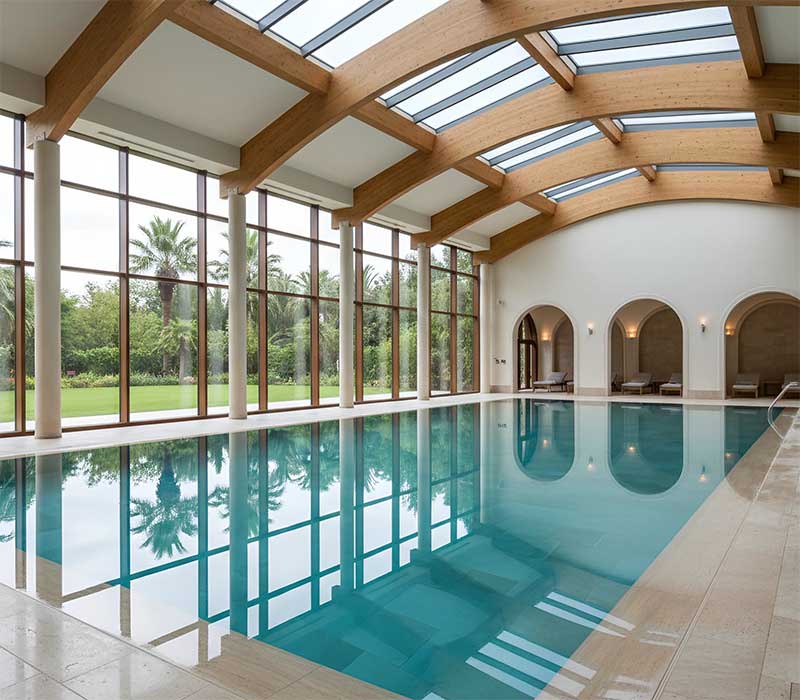
Key Performance Comparison
1. Sterilization: Ozone offers 99.99% kill rates for common pathogens (E. coli, Staphylococcus aureus) and is effective against chlorine-resistant parasites like Cryptosporidium (0.5mg/L for 1 minute vs. chlorine’s 10mg/L for 1 hour). Chlorine works well for most bacteria but struggles with tolerant pathogens.
2. Safety & By-Products: Ozone produces no harmful by-products. Chlorine forms disinfection by-products (THMs, HAAs) linked to health risks and chloramines, which cause odor, eye, and skin irritation.
3. Water Quality: Ozone reduces turbidity for clearer water and eliminates odors, ideal for sensitive users. Chlorine can leave a pungent smell and cause irritation if concentrations are too high.
4. Compliance: CDC recommends 1-2ppm free chlorine (3ppm for hot tubs); WAC 246-260-999 limits ozone to 0.05ppm in air and 0.05mg/L in water post-adsorption.
Cost & Maintenance
- Initial Investment: Ozone systems cost 2-3x more (10,000-50,000 RMB for 1000m³ pools) than chlorine equipment (2,000-8,000 RMB).
- Ongoing Costs: Ozone cuts chlorine use by 50-70%, lowering annual costs (1,000-4,500 RMB vs. 8,000-15,000 RMB for chlorine).
- Maintenance: Ozone systems last 8-15 years with professional upkeep; chlorine equipment lasts 3-5 years with frequent filter and part replacements.
Practical Recommendations
- Chlorine Alone: Best for small residential/budget pools (simple, low upfront cost).
- Ozone Alone: Rarely used (no residual protection); suitable only for high-end “no-residual” pools with UV backup.
- Ozone + Chlorine: Mainstream for commercial pools (ozone for rapid disinfection, low chlorine for residual protection, balancing safety and experience).
Safety Tips
- Ozone: Use negative pressure generators, install sensors, and operate when pools are empty; ventilate post-treatment.
- Chlorine: Store safely, wear protective gear, test levels daily, and maintain proper pH.
Ozone excels in speed, water quality, and safety; chlorine offers affordability and residual protection. The combined approach is optimal for most pools, balancing effectiveness, compliance, and cost.
-- End --
We found other products you might like!
Similar article ranking
- Ozone Generator Sizing Calculator: How to Calculate the Right Size
- 10g/h vs 20g/h Ozone Generator: Which Size Do You Need?
- Ozone Generator for Gym and Fitness Center Air Purification in 2026
- Ozone Generator Maintenance Guide: Essential Care and Troubleshooting Tips
- Ozone Generator for Swimming Pool Water Treatment: Chemical-Free Pool Sanitizati
- Commercial Ozone Generator: Complete Guide for Businesses
- How Does Ozone Work in Swimming Pool Water Treatment?
- Hotel Room Ozone Disinfection Complete Guide 2026
- Ozone Generator for Drinking Water Treatment: Complete Implementation Guide
- Ozone Generator for Semiconductor Manufacturing: High-Purity Cleaning Solutions
Ozone Equipment
- Portable Household Ozone Generator
- 50g-100g Ozone Generator
- 40g-100g ozone & oxygen machine
- SOZ-10G ozone generator
- 40g-200g ozone & oxygen machine
- OW Series Oxygen Generator
- DH-A Dryer
- Negative Pressure Ozone Generator
Ozone Application
- Residential Air purification Application
- ozone Application in wastewater treatment
- Ozone application in aquarium
- ozone Application in Pure water treatment
- Ozone Application in Aquaculture
- Ozone application in swimming pools
Latest news articles
- Ozone for Data Center Cooling Water: Biofouling Control, Energy Savings, and Sus
- How to Compare Ozone Generator Quotes: Reading Specifications Beyond the Price T
- Ozone Generator Power Supplies: How IGBT Inverter Technology Improves Output Sta
- Ozone Applications in Semiconductor Manufacturing: Wafer Cleaning, ALD Precursor
- Ozone for Pulp and Paper Mills: ECF-Complementary Bleaching, Whitewater Treatmen
- Ozone Off-Gas Destruction Systems: Thermal vs. Catalytic Destruct Units for Safe
- Ozone Sanitation for Seafood Processing Plants: Wash Water Reuse, Cross-Contamin
- Ozone vs. UV Disinfection for Water Treatment: A Practical Selection Guide for I
- Ozone Laundry Systems: How Cold-Water Ozone Washing Cuts Energy Costs for Hotels
- Total Cost of Ownership for Industrial Ozone Generators: A 10-Year Lifecycle Cos
- Ozone Mass Transfer Explained: Venturi Injectors, Bubble Diffusers, and Packed T
- Laboratory Ozone Exposure Systems: Controlled O3 Delivery for Biological, Medica
- Aquaculture Water Treatment: How Ozone Improves Fish Health and Biosecurity in C
- Case Study: Ozone Cooling Tower Retrofit Delivers 83% Chemical Savings and a 10-
- Ozone for Groundwater Treatment: Removing Iron, Manganese, and Hydrogen Sulfide
- Ozone Generator Control Systems Explained: PLC Automation, Remote Monitoring, an
- Ozone for Greenhouse Irrigation Water: Pathogen Control and Root Disease Prevent
- Industrial Ozone Systems: From 10 g/h to 200 g/h Output — A Sizing Guide for Wat
- Ozone in Pharmaceutical Water Systems: Purified Water, WFI Production, and Stora
- Industrial Ozone Generator Sizing: A Practical Calculation Guide for Water Treat